This post has already been read 4658 times!
Few things feel as calming as folding paper slowly with intent and focus. That’s exactly where therapy using origami comes in. This simple, ancient art of paper folding has quietly become a powerful tool for emotional healing and mental clarity. It’s gentle, accessible, and surprisingly effective.
Whether you’re managing anxiety, trying to regain focus, or just need a mindful pause, origami might be the quiet ally you’ve been looking for.
Why Origami Works as Therapy
Origami creates order out of flat, ordinary paper. Each fold is intentional. Each step has meaning. That process helps create a sense of control. For people facing emotional stress or inner chaos, this sense of control can be deeply healing.
But there’s more. Folding also slows you down. You can’t rush a paper crane. Your breathing steadies. Your thoughts settle. It’s a physical meditation that doesn’t ask you to sit still with closed eyes.
Researchers have also noticed that engaging hands in creative tasks like origami can reduce cortisol, the stress hormone. So yes, this isn’t just a feel-good activity. It has science behind it too.
A Therapist’s Story: Folding Through Grief
When Claire, a 42-year-old grief counselor, lost her partner suddenly, she struggled with overwhelming emotions. Talking helped, but only up to a point. One day, she remembered teaching origami to children years ago. She started folding again—paper cranes at first, then stars and boxes.
“It felt like putting something broken back together,” she shared in a therapy group later. Claire didn’t aim for perfection. She just folded. And with each paper piece, she felt a little more whole.
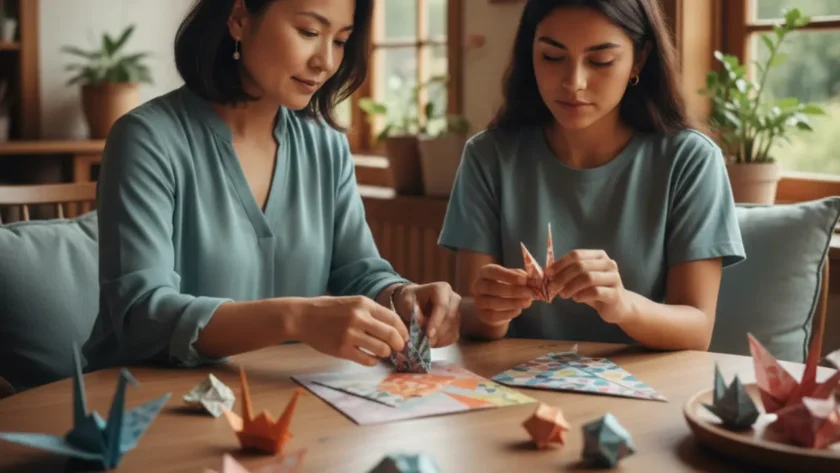
She eventually introduced therapy using origami into her sessions. Many of her clients now fold quietly while talking. It eases them into difficult conversations.
Emotional Benefits of Therapy Using Origami
Therapy using origami taps into both creativity and mindfulness. Here are a few emotional benefits many people experience:
Reduces anxiety: The repetitive motion calms racing thoughts.
Improves mood: Creating something with your hands releases dopamine.
Increases patience: Some folds require trial and error. That builds emotional tolerance.
Fosters presence: Your hands can’t fold and scroll at the same time. Origami keeps you here and now.
Offers achievement: A finished piece, however simple, brings joy and satisfaction.
Using Origami in Daily Life
You don’t need special paper or hours of free time. Just start small.
Try this simple exercise:
- Keep a stack of origami paper or any square paper by your desk.
- Take five minutes after a stressful call or task.
- Fold a crane or heart. Focus only on the folds.
Doing this daily can shift your mindset more than you’d expect. Some therapists even suggest starting or ending the day with a single fold.
It’s not about the result. It’s about the act.
Teaching Kids Emotional Regulation
Children often struggle to name or process emotions. Therapy using origami can gently teach them to pause and reflect.
Rachel, a school psychologist, often begins her sessions with kids by folding simple animals. While folding, the child usually opens up naturally. “The paper gives their hands something to do while their hearts learn to speak,” she says.
It’s also empowering for them to create something. Many kids take their folded pieces home proudly.
Origami and Trauma Recovery
Folding paper may seem like a small step in the face of trauma. But small, repetitive actions can be powerful.
People healing from trauma often feel disconnected from their bodies. The simple act of folding paper can help reestablish that mind-body link.
It gives them something safe, tangible, and controlled. Even if everything else feels uncertain.
Some trauma therapists use origami as a grounding technique. One therapist shared how a client with PTSD carried a few sheets of paper and folded whenever flashbacks threatened. It helped bring her back to the present.
Group Sessions and Community Healing
Therapy using origami is also gaining popularity in group settings. Retirement homes, veterans’ centers, and addiction recovery programs have started offering origami workshops.
Why? Because it creates connection without pressure. Not everyone wants to talk in a group, but everyone can fold.
The shared activity helps people open up without feeling exposed. It builds quiet bonds and brings smiles without words.
Start Your Own Origami Practice
If you’re curious about trying therapy using origami, you don’t need to enroll in a class right away. Start with what you have.
Step 1: Get some square paper. Even an old magazine page works.
Step 2: Look up beginner tutorials—start with hearts, cranes, or boats.
Step 3: Set aside five minutes a day.
It might feel awkward at first, but stay with it. The rhythm will come. And before you know it, you might start looking forward to those folding minutes.
You can also try journaling after each session. How did you feel before and after folding? What came up? Were your thoughts clearer?
That reflection deepens the therapeutic value.
Origami as Self-Care
We often think of self-care as big acts—spa days, vacations, or long meditations. But real, sustainable self-care is what you do daily.
Folding a simple crane during your lunch break. Making a star before bed. Teaching your child to fold a fox.
These little rituals ground you. They remind you that even a thin sheet of paper can transform. So can you.
Final Thoughts
Therapy using origami may not replace traditional therapy, but it can be a beautiful companion to it. It’s meditative, creative, and healing—often when words fall short.
And the best part? Anyone can do it. No age limits, no artistic talent needed. Just a bit of paper and some quiet time.
Give it a try. Fold a little peace into your day.
Have you ever tried origami for emotional support or mindfulness? Share your story in the comments—I’d love to hear how it helped you.