
This post has already been read 5016 times!
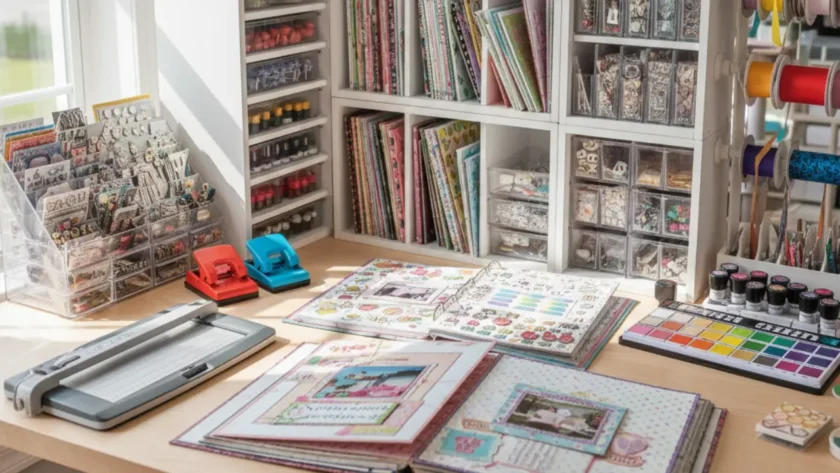
A cluttered workspace can drain the joy from scrapbooking. A good scrapbooking organizer doesn’t just store your supplies—it fuels creativity. Whether you’re a weekend crafter or a daily memory keeper, staying organized makes your hobby more fulfilling and stress-free.
Let’s explore how to create a scrapbooking setup that works for you, not against you.
Why a Scrapbooking Organizer Matters
Ask any seasoned scrapbooker, and they’ll tell you: chaos kills creativity.
I once visited my friend Sara, a passionate scrapbooker. Her table was covered with washi tape rolls, stickers, paper scraps, and scissors. It took her 15 minutes just to find her favorite corner punch. She laughed and said, “I spend more time searching than scrapping.”
That’s when it clicked. Even if you have the prettiest supplies, without an efficient scrapbooking organizer, they’re just clutter.
Being organized saves time, reduces waste, and keeps your inspiration flowing.
Step 1: Assess Your Space and Habits
Before you buy any storage boxes or containers, step back. Where do you scrapbook most often? Do you always work at your desk, or do you carry your materials around?
If you scrap in one place, consider a permanent organizer. If you move around, go for portable options. A rolling cart, like the popular three-tier craft carts, works great. You can roll it from room to room or even tuck it away when you’re done.
Also, think about how you work. Do you complete pages in one go, or do you start multiple layouts at once? Your organizer should reflect those habits.
Step 2: Group Supplies by Category
A smart scrapbooking organizer keeps things easy to find. Group similar items together:
- Patterned papers and cardstock
- Stickers and die-cuts
- Washi tapes and ribbons
- Adhesives
- Cutting tools and punches
- Pens and markers
Use drawer dividers, zip pouches, or labeled bins for each group. Clear containers work well because you can see what’s inside without opening every lid.
Step 3: Label Everything Clearly
Labeling might sound boring, but it saves so much time.
Use a label maker, stickers, or even handwritten tags. For example, one drawer could say “Alphabets” while another says “Holiday Stickers.”
Some people even color-code their labels—red for tools, blue for embellishments, green for paper. Make it fun!
When your supplies are clearly labeled, you’ll spend less time hunting and more time crafting.
Step 4: Use Vertical and Hidden Storage
Most people focus only on tabletops. But vertical space can be a game-changer.
Pegboards on walls can hold scissors, tape, stamps, and more. Hanging file folders work well for storing paper collections.
Under-bed boxes or behind-door organizers are great if you’re low on space. Tuck away seasonal supplies until needed. You don’t need everything within arm’s reach all the time.
Step 5: Store Finished Projects Properly
Don’t forget your finished albums. A scrapbooking organizer isn’t just for supplies—it’s also for preserving what you create.
Store your albums upright on shelves. If you make loose layouts, consider large flat boxes or binders. Always keep them in a dry, cool place, away from direct sunlight.
A little care goes a long way in keeping your memories safe for years.
Step 6: Try the “Use and Return” Rule
No matter how good your organizer is, things can still get messy if you’re not disciplined.
A simple rule to live by: take something out, use it, put it back. This works especially well with smaller items like stickers, stamps, and embellishments.
You don’t need to be a perfectionist. Just five minutes of cleanup after each session keeps your space tidy.
How a Mom Made Scrapbooking a Family Affair
Emma, a mother of two in New Jersey, shared how organizing her craft space changed everything.
“I used to do it after the kids went to bed. Then I bought a simple cart and grouped everything into trays. Now my daughters help me decorate pages on weekends. It’s become our favorite family activity.”
Organization made it possible to share her hobby—and memories—with her children.
Bonus Tips: Scrapbooking Organizer on a Budget
Organizing doesn’t have to be expensive. Here are a few ideas:
- Use empty mason jars for pens and scissors
- Repurpose shoe boxes for paper storage
- Turn old muffin trays into embellishment holders
- Buy drawer units from thrift shops and repaint them
- Use zippered mesh bags for travel scrap kits
- What matters is functionality, not how fancy it looks.
Final Thoughts: Build a System You Can Maintain
It’s easy to get inspired and start organizing everything in one day. But the key is to create a system that works long-term.
Your scrapbooking organizer should reflect how you work, not how others do it on Pinterest.
Start small. Organize one drawer or one supply type. Notice how it feels. Do you find things more easily? Are you enjoying the process more?
Build on what works. Ignore what doesn’t. And most importantly, give yourself grace. It’s okay if your space isn’t perfect. It just needs to support your creativity.
Do you have a scrapbooking organizer setup that works wonders for you? Or are you struggling to keep things sorted? Share your experiences, tips, or even photos in the comments. Let’s learn from each other and create joyful, clutter-free crafting spaces together!


