
This post has already been read 4980 times!
Children light up at the simplest things. A plain square sheet of paper, when folded right, can become a dog, a boat, or a flapping bird. That’s the beauty of origami for children—it combines fun with learning, art with patience, and simplicity with wonder.
Whether you’re a parent, teacher, or a curious child, origami for children offers more than just craft time. It teaches life skills quietly, while fingers fold paper and imagination takes flight.
Why Origami is Perfect for Young Minds
Origami strengthens fine motor skills without feeling like a chore. It gently improves hand-eye coordination and boosts concentration. Most importantly, children feel a sense of accomplishment with each finished figure.
A child named Alex, just six years old, learned how to make a paper crane during a rainy afternoon. The look on his face when it finally flapped its wings? Priceless. And now, it’s his favorite weekend activity.
That’s the kind of joy and focus origami for children can create.
Start with Simple Shapes First
Don’t overwhelm kids with complicated folds at the beginning. Start with a boat, a heart, or a fox face. These require around 5–7 folds and are easy to memorize.
A simple way to begin? Take a square paper and fold a sailboat:
Fold the paper in half to make a triangle.
Fold each corner of the base upward.
Flip and flatten—voilà, a sailboat appears.
This one-minute fold can turn into ten minutes of storytelling on a make-believe sea.
Make It a Story, Not Just a Fold
One trick that works wonders? Turn each origami session into a story. Fold a frog, then make it jump into a paper pond. Craft a penguin and talk about Antarctica.
Children remember stories. When craft becomes storytelling, they engage longer and learn better.
A parent once shared how her daughter Lucy, aged 8, started creating jungle scenes after folding an origami lion. Each animal added led to new questions and more folds. That’s natural curiosity, nurtured through art.
This creative expansion is one reason origami for children is such a valuable tool in both homes and classrooms.
Materials Matter (But Keep It Simple)
While origami can be done with any paper, certain choices work better for children:
Origami paper: Pre-cut squares save time and are brightly colored.
Magazine pages: Great for recycling and fun textures.
Printer paper: Works well when cut into squares.
Avoid thick sheets or textured paper in the beginning. Children struggle with too much stiffness and the folds don’t hold well.
If you’re just introducing origami for children, stick with basic origami paper. It’s forgiving, colorful, and keeps the process frustration-free.
Benefits Beyond the Craft Table
You’re not just teaching kids to fold paper. You’re helping them:
Improve memory by recalling fold sequences
Develop spatial awareness
Practice patience and delayed gratification
Strengthen their visual imagination
Teachers often use origami for children in classrooms to settle energetic kids after lunch. The quiet focus it encourages is a real gift.
Group Activities Make Folding Fun
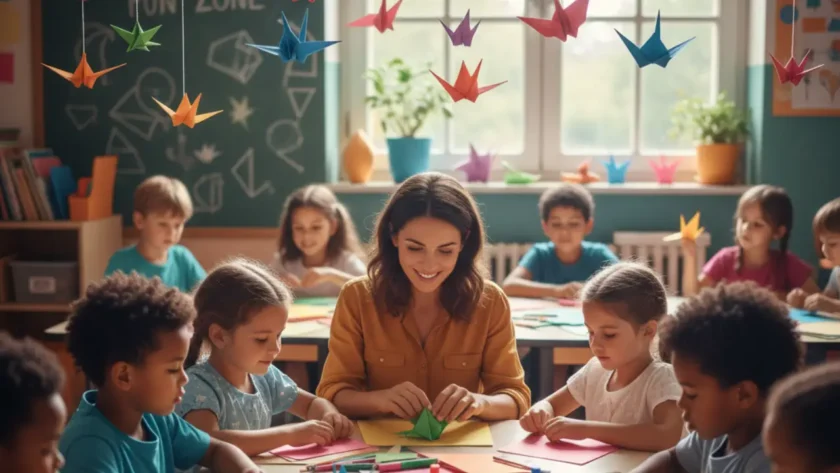
Origami becomes even more exciting when done in groups. Organize a folding circle for a birthday party or a classroom event.
You can even assign roles—one child gives folding instructions, the others follow. This builds leadership and listening skills.
During a summer camp session in California, 12 kids each made a part of a paper zoo. Tigers, elephants, birds, and fences—everything was folded. They displayed it like a diorama. No screen time, no complaints.
Common Mistakes and How to Avoid Them
Children are bound to make folding errors. That’s fine. But help them avoid frustration with these tips:
Always start with a clear square sheet.
Make sure each fold is creased well.
Don’t rush through steps. Take it slow.
Encourage them to unfold and retry when stuck.
Mistakes are part of learning. Let them enjoy the process, not just the outcome.
Go Beyond with Origami Challenges
Once children master the basics, add a twist.
Speed folding contests: Who can fold a paper cat fastest?
Theme days: Fold only animals today or just ocean creatures.
Fold and tell: After each fold, kids share a short story around it.
These challenges make origami even more interactive and help build creativity.
This is where origami for children becomes more than just folding—it becomes play, expression, and imagination.
Where to Find Inspiration and Resources
You don’t need to be an origami expert to guide children.
Many free printable guides are available online. YouTube channels also demonstrate folds step-by-step. Pick a few and build a little origami library at home or school.
Books like “Origami Fun for Kids” or “My First Origami Kit” are also great investments. They come with papers and instructions that are easy to follow.
Don’t Just Fold—Display Their Art
Children love to see their creations appreciated. Create a corner in your home or classroom for displaying finished models.
You can hang paper birds from the ceiling, line window sills with folded flowers, or make a wall collage with hearts and stars.
It encourages kids to keep folding and builds a sense of pride in their work.
From Fun to Lifelong Interest
What starts as fun may grow into a lifelong interest. Origami has deeper branches, from mathematical folding to modular and 3D creations.
Even professional designers use origami principles in architecture and engineering today. But it all begins with one simple fold.
Get Started with Origami Today
All it takes is paper, patience, and a little creativity. Whether you’re at home, in a classroom, or running a summer camp, origami for children opens the door to learning in the most joyful way.
So grab a paper square. Teach your child to fold a butterfly or a rocket. Watch how their face lights up and how quietly they focus.
Sometimes, the best gifts we give children don’t come in boxes—they come folded.
Try Origami with Your Kids Today!
Have you tried origami with your children yet? What was their favorite fold? Tell us in the comments below. We’d love to hear your stories and feature some in our next post!


