This post has already been read 2 times!
Boho embroidery brings freedom and creativity into every stitch. It celebrates color, texture, and individuality, turning ordinary fabrics into wearable and decorative art. Unlike rigid embroidery traditions, boho embroidery thrives on spontaneity. The stitches, colors, and motifs often flow together like an evolving story.
Why Boho Embroidery Stands Out
Boho embroidery is unique because it embraces imperfection and character. While classic embroidery seeks neatness, this style celebrates irregularities. A line of uneven stitches can add movement, while a bold patch of mismatched colors brings unexpected beauty.
It is not about symmetry or polish. Instead, it is about expression. Each design can look slightly different, which makes every piece personal. This is why so many people find it deeply satisfying—it reflects freedom.
The Cultural Roots of Boho Embroidery
The term “boho” comes from “bohemian,” linked to unconventional lifestyles and creative communities. Embroidery became part of this culture through folk traditions, tribal motifs, and vintage artistry. During the 60s and 70s, embroidered clothing became a symbol of self-expression and rebellion against mass-produced fashion.
Think of jackets embroidered with peace symbols, skirts decorated with flowers, or bags stitched with tribal patterns. Each stitch told a story, often connected to personal experiences or travels. This storytelling aspect continues today, making boho embroidery not only decorative but also meaningful.
Materials You Need to Begin
Starting with boho embroidery does not require expensive tools. A basic kit includes:
- Embroidery hoop: Holds fabric tight for neat stitching.
- Needles: Sharp embroidery needles with medium eyes.
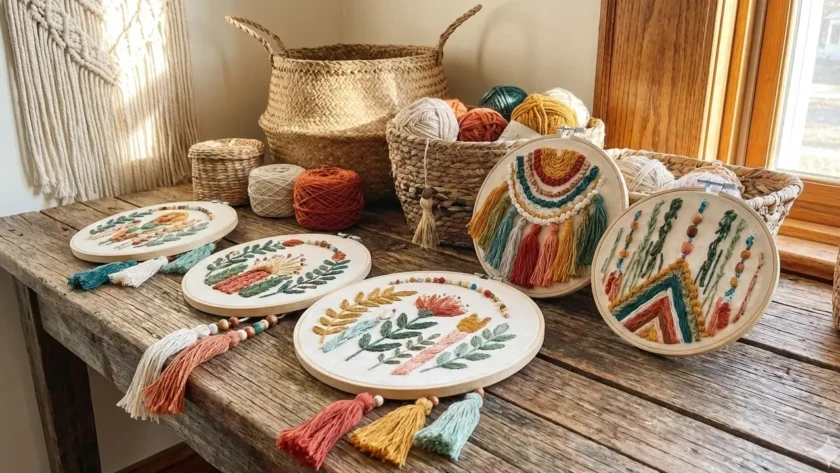
- Threads: Embroidery floss in earthy and vibrant tones.
- Fabric: Cotton, denim, canvas, or linen.
- Scissors: Small, sharp embroidery scissors.
Optional extras like beads, sequins, or metallic threads can take designs further. Some artists also recycle old clothes or scraps, giving them new life with embroidery.
Stitching Techniques That Define the Style
The beauty of boho embroidery lies in mixing different stitches freely. Some of the most effective include:
- Chain stitch: Creates flowing outlines and borders.
- Satin stitch: Fills bold areas like petals or leaves.
- French knots: Add textured dots for depth.
- Feather stitch: Works beautifully for organic shapes like branches.
- Running stitch: Quick and effective for accents.
- Lazy daisy stitch: Perfect for flowers.
Layering these stitches adds richness. For example, a sunflower can use satin stitches for petals, chain stitches for the stem, and French knots at the center.
Choosing Colors with Boho Vibes
Colors set the tone of boho embroidery. The most common palettes include:
Earthy tones: Rust, olive, mustard, and cream.
Vibrant mixes: Turquoise, magenta, and gold.
Pastel layers: Soft pinks, lilacs, and pale blues.
The secret is in combining contrasts. Pairing muted earthy tones with sudden bursts of bright color creates the eclectic, free-spirited effect that defines boho embroidery.
Clothing as Your Canvas
Clothes are the most popular surface for boho embroidery. Jeans, skirts, denim jackets, or even simple t-shirts can carry unique motifs.
A practical idea is to start with pockets, cuffs, or collars. These small areas give you manageable space without overwhelming the garment. Over time, you can move on to larger sections like jacket backs or skirt hems.
One example comes from a crafter named Lisa, who revived her faded black jeans. She stitched climbing vines along one leg and embroidered small moons and stars at the hem. The design made the jeans a conversation piece and kept them out of the discard pile.
Adding Charm to Home Décor
Boho embroidery also shines in home décor. Cushion covers, throws, or wall hangings can transform a room with personality.
Imagine a set of neutral-toned pillows. By adding chain-stitched mandalas in bright thread, they instantly become artistic focal points. Similarly, a plain wall hanging can turn into a centerpiece when embroidered with feathers, arrows, or abstract motifs.
These touches help create a warm, handcrafted environment instead of a mass-produced look.
Accessories That Stand Out
Small accessories provide endless opportunities for experimentation. Tote bags, shoes, hats, and scarves all carry boho embroidery beautifully.
For example, a canvas tote bag can feature a cluster of embroidered wildflowers. A pair of plain sneakers can gain a second life with stitched stars or geometric lines.
Anna, a student, embroidered her canvas backpack with a mix of feathers and suns. It not only personalized her bag but also sparked conversations with strangers who admired it.
Tips for Beginners
Boho embroidery is approachable, but beginners often benefit from simple guidance:
- Begin with small projects: Try a pouch or handkerchief.
- Use washable fabric markers: Draw guiding lines before stitching.
- Mix threads: Blend two colors together for natural shading.
- Allow mistakes: Slight irregularities add charm.
- Practice regularly: A few minutes daily builds skill and confidence.
Remember, the process itself is enjoyable. The more you stitch, the more your style develops.
Advanced Ideas for Experienced Crafters
If you already know embroidery, you can expand your boho style with:
- Layering textures: Combine embroidery with appliqué or patchwork.
- Adding embellishments: Stitch beads, shells, or coins into patterns.
- Creating depth: Use long and short stitches to add shading.
- Working freehand: Skip traced patterns and let designs flow naturally.
These techniques make your work stand out as original, not just decorative.
Keeping Your Embroidery Safe
Preservation is key after putting so much effort into a project. Here are useful care tips:
- Wash by hand with mild detergent.
- Avoid twisting or wringing fabric.
- Turn clothes inside out before washing.
- Store decorative items away from direct sunlight.
- Iron embroidery gently with a cloth on top.
These small steps help your work stay beautiful for years.
Why People Love Boho Embroidery Today
Many people are turning to embroidery as a way to slow down. The act of hand stitching encourages mindfulness. It also creates a tangible result that feels more rewarding than digital distractions.
Groups often gather to share stitching sessions. The social element, combined with creativity, brings joy and connection. At a time when many crave authenticity, boho embroidery delivers both artistic freedom and a sense of grounding.
Final Thoughts
Boho embroidery goes beyond decoration. It reflects personality, creativity, and mindfulness. Each stitch transforms ordinary fabric into something meaningful and alive. Whether you decorate a jacket, design cushions, or personalize a tote, your embroidery will always carry your unique touch.
Pick up a needle, choose your colors, and start experimenting today. Your imagination is the only limit.
Have you tried boho embroidery yet? Share your favorite project ideas or stories in the comments—I’d love to hear your experiences.