
This post has already been read 10 times!
Candle making is both relaxing and fulfilling. But let’s be honest—it’s easy to mess up. From cracked wax to uneven burns, candle making mistakes can turn your cozy hobby into a frustrating mess. If you’ve ever looked at your finished candle and wondered, “What went wrong?”, you’re not alone.
In this guide, we’ll walk through common candle making mistakes, how to spot them, and—more importantly—how to avoid them. Whether you’re new or experienced, these tips will help you make smoother, longer-lasting, and better-looking candles.
1. Uneven Burning: A Common Candle Dilemma
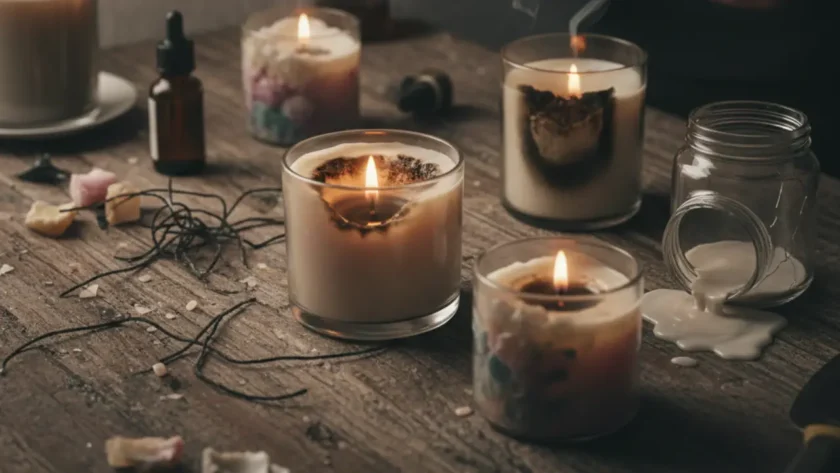
An uneven burn is one of the most common candle making mistakes. It usually shows up as a tunnel running through the center, leaving wax along the edges.
A key cause? The wick wasn’t centered properly or wasn’t the right size.
What you can do:
- Use a wick-centering tool or even a pair of chopsticks to hold the wick in place.
- Pour a little wax to anchor the wick, let it set, then pour the rest.
- Match the wick size with the container and wax type. Check the manufacturer’s wick guide if unsure.
Tip: Neha started making candles for gifting. Her first batch tunneled terribly. After she used a wick guide and tried different sizes, her next candles burned clean and even.
2. Cracked Wax: Looks Matter Too
Cracks in the wax don’t always affect the function, but they sure ruin the look. Most often, wax cracks when it cools too fast—another one of those sneaky candle making mistakes.
How to fix it:
- Let the candles cool at room temperature.
- Avoid fridges, fans, or AC near your workspace.
- Use a thermometer to pour wax at the right temperature—usually 130–150°F, depending on your wax.
Pro tip: Cover your cooling candles with a cardboard box to maintain even room temperature and prevent drafts.
3. Frosting on Soy Candles: Not Always Preventable
Soy wax naturally frosts—it’s part of its charm. But it can be frustrating when you want a smooth finish. While you can’t eliminate it completely, you can reduce it.
Tips to reduce frosting:
- Stir wax gently and slowly to avoid adding air bubbles.
- Pour at a slightly lower temperature than usual.
- Try using additives specifically designed to reduce frosting.
Example from experience: Reema noticed white patches on her soy candles. She switched to stirring slowly and pouring at 120°F instead of 135°F. It didn’t eliminate frosting, but her candles looked cleaner and more professional.
4. Sinkholes: That Sneaky Center Dip
Sinkholes happen when the wax settles and cools unevenly, often leaving a hollow spot in the middle. It’s one of those candle making mistakes that aren’t obvious—until you light the candle.
How to prevent them:
- Try a two-pour method: pour most of the wax, let it settle, then top it off.
- Use a heat gun to melt the top layer and fill in the gap.
- Gently poke around the wick area with a skewer right after pouring, to release air pockets.
A quick story: Anisha gifted her cousin a handmade candle that had a giant hole in the middle after one burn. She later learned about the two-pour method and hasn’t had a sinkhole since.
5. Wet Spots: When Candles Lose Contact
Wet spots show up as dark, blotchy patches on the container wall. They’re not wet, but they look like moisture. This is a common cosmetic issue due to the wax pulling away from the glass.
How to fix this visual nuisance:
- Preheat your containers slightly before pouring.
- Use containers compatible with your wax type.
- Pour slowly and tap the container gently to release trapped air.
Helpful tip: A warm oven (not hot!) can help preheat jars. Just don’t overdo it—5 minutes at 100°F is enough.
Top Tips to Avoid Candle Making Mistakes
Beyond the big five issues, there are general habits that separate successful candle makers from the rest.
1. Test in Small Batches
Don’t jump into big batches. Try new wax, fragrance, or wick combos in small amounts. Testing saves money and time.
2. Keep a Candle Journal
Write down every little detail: wax type, fragrance load, wick size, pour temp, and results. When something goes wrong—or right—you’ll know why.
3. Be Patient
Yes, it’s hard. But candles need time to cure. Let them sit for 48–72 hours before burning to get the best scent throw.
4. Use Quality Ingredients
Cheap wax or fragrance oils can lead to issues. Invest in reputable suppliers, especially if you’re selling your candles.
Final Thought: Mistakes Are Lessons in Disguise
Everyone makes mistakes—especially when learning something new. The secret is to learn from them, adjust, and keep going. Most candle making mistakes are fixable with a little knowledge and care.
Like Rina, who nearly gave up after three failed batches. Uneven burns, frosting, and wet spots plagued her early candles. But she kept experimenting, taking notes, and asking fellow crafters for advice. Today, she runs a small home-based candle business—and teaches workshops!
Have you experienced any of these candle making mistakes? What helped you overcome them? Share your tips and stories in the comments. Let’s support each other and grow together in this beautiful craft.


