This post has already been read 4918 times!
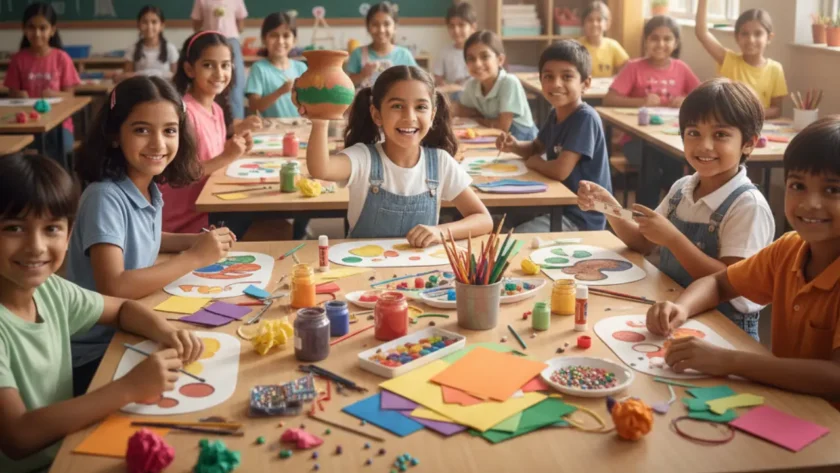
Finger painting on paper. Making rockets from toilet rolls. We all remember these arts and crafts school projects. But they were more than just playtime. They laid the foundation for creativity, problem-solving, and confidence.
Today, schools across the globe are rethinking how they teach and engage. And arts and crafts are making a bold return. These hands-on projects aren’t just fillers between subjects. They shape students in ways textbooks never can.
Let’s explore how arts and crafts school projects can truly change the way children learn, grow, and express themselves.
Why Schools Should Invest in Arts and Crafts
Classrooms today often focus heavily on academics. But creativity is just as important. Arts and crafts school projects help children explore ideas, feelings, and personal stories.
Unlike math formulas or grammar rules, art offers flexibility. A child painting a landscape may unknowingly practice symmetry. Another making a 3D model may grasp geometry better than through a textbook.
Beyond academics, these projects teach patience, attention to detail, and decision-making. They nurture the brain’s right side, balancing logical thinking with imagination.
Crafts Build Emotional Intelligence
A child who struggles to express themselves in words might speak volumes through clay or collage. Arts and crafts provide emotional outlets. Teachers often notice that students who engage in craft projects become more focused and calm.
I remember a teacher named Ms. Carter from a school in Oregon. She once shared how a troubled 8-year-old boy opened up during a paper craft session. Until then, he’d barely spoken in class. With scissors and glue in hand, he started sharing his life bit by bit. Art made that space safe for him.
Arts and Crafts Support Learning Across Subjects
Art isn’t separate from learning—it supports it.
Science: Making paper mache planets helps children understand the solar system.
Math: Origami projects introduce concepts like symmetry and fractions.
History: Creating scrolls or cave painting replicas brings ancient times alive.
Languages: Story-based crafts build vocabulary and sequencing skills.
These arts and crafts school projects connect lessons to real experiences. They make abstract ideas more tangible and fun.
Hands-On Learning Benefits All Types of Learners
Some children learn best through visuals. Others through touch. Arts and crafts blend both. A student with attention issues might struggle with lectures but thrive during a step-by-step craft.
One principal in New Zealand introduced weekly craft labs. Students created book covers, classroom displays, and dioramas. Results? Test scores stayed the same—but classroom behavior improved. Students became more involved, enthusiastic, and respectful.
Art creates equal ground. It doesn’t matter if you’re the top math student. Everyone starts from scratch. Everyone gets a chance to shine.
Developing Lifelong Skills Through Simple Projects
Arts and crafts school projects may seem small. But their impact is huge. Here’s what they quietly teach:
- Time management through multi-step projects.
- Teamwork during group murals or installations.
- Resourcefulness when materials run short.
- Resilience when the first idea doesn’t work out.
These skills stay with children for life. Whether they become engineers, artists, or doctors—these abilities shape their success.
Boosting Confidence and Celebrating Identity
Completing a project gives children something to feel proud of. Displaying their work on school walls adds value to their voice. They see that their ideas matter.
Arts and crafts also allow students to express culture, identity, and tradition. A Japanese student sharing origami. A Mexican child crafting a Day of the Dead skull. These experiences make schools more inclusive and connected.
How Teachers Can Integrate Craft Projects Easily
You don’t need a fancy studio or expensive supplies to get started. Most successful projects use everyday materials—paper, glue, cardboard, natural items.
Here are simple ways to introduce crafts in school:
- Weekly craft corner: Give children one period a week for open-ended creation.
- Cross-subject projects: Connect crafts with science, math, or history lessons.
- Craft-based storytelling: Let kids build puppets and act out a chapter.
- Art shows or exhibitions: Motivate students by showcasing their work.
Involve parents and community when possible. Older students can mentor younger ones in craft clubs. It builds leadership and strengthens school culture.
Schools Around the World Are Catching On
Many schools are shifting focus back to holistic education. Finland, known for its top-rated system, has regular craft periods. In Canada, after-school programs often include creative workshops.
In the US, some school districts allocate grants for art supplies and teacher training. Slowly but surely, the importance of creativity is being recognized again.
Not Just for Kids: Teachers Grow Too
Teachers who explore crafts themselves become better facilitators. A teacher learning watercolors understands a student’s struggle better. A principal who joins clay modeling inspires others.
Arts and crafts aren’t just about paper and glue. They build bridges—between student and teacher, school and community, logic and emotion.
Final Thoughts: Let’s Give Craft Its Due Place
Arts and crafts school projects are not extras. They’re essentials. They make learning joyful, real, and human. They teach skills that no worksheet can.
If you’re a teacher, start small, as a parent, suggest more creative lessons and if you’re a student, ask for time to make and build.
Let’s raise a generation that’s not just smart—but also creative, confident, and connected.
What was your favorite arts and crafts school project? Did it teach you something beyond the classroom? Share your story in the comments. Let’s celebrate creativity together!