This post has already been read 4458 times!
Every stitch starts with a decision. For embroidery, one of the most important choices you’ll make is your thread.
Whether you’re brand new or a seasoned hand, selecting the right embroidery thread can make or break your design. Threads affect how your final piece looks, how long it lasts, and how it feels to work with.
Let’s walk through everything you need to know so you never feel lost in front of that rainbow wall of skeins again.
Why Thread Selection Really Matters
Thread isn’t just about color. The type, weight, sheen, and even brand of your embroidery thread influences your results. A metallic thread might shine beautifully but fray easily. Cotton threads feel classic but may look dull next to rayon or silk.
Take Sarah, for example. She started embroidery during lockdown. Excited, she bought a mixed thread pack online. But her first floral hoop turned out patchy. The colors didn’t blend well, and the threads kept knotting.
She later discovered her cheap bundle had low-quality polyester thread, which wasn’t made for detailed work.
Lesson? Your stitches are only as good as your thread.
The Most Common Types of Embroidery Thread
Let’s break down the main types you’ll encounter.
1. Stranded Cotton (Floss)
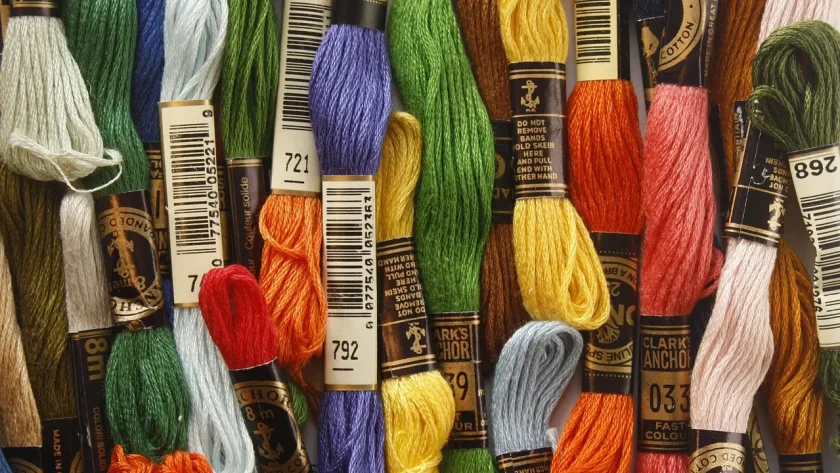
This is the most widely used thread for embroidery. It usually has six strands you can separate. Perfect for everything from cross-stitch to surface embroidery.
Best for: Versatility, ease of use
Brands: DMC, Anchor, Cosmo
2. Perle Cotton
This is non-divisible thread that has a twisted, shiny look. It comes in different thicknesses (No. 3 is thickest, No. 12 is finest).
Best for: Bold designs, texture-rich stitches
Use when: You want your stitches to pop off the fabric
3. Silk Thread
Luxurious, soft, and incredibly shiny. It glides smoothly but can be slippery.
Best for: Fine detail work, heirloom projects
Downside: Can be expensive and harder to manage
4. Rayon Thread
Known for its bright sheen, rayon is popular in machine embroidery but used in hand embroidery too.
Best for: Shiny finishes
Be careful: It tangles easily if not handled gently
5. Metallic Thread
Adds sparkle but is notoriously tricky. It often tangles or frays if you don’t prep it correctly.
Best for: Decorative accents
Tip: Use shorter lengths and a thread conditioner
How to Choose the Right Thread for Your Project
Ask yourself these questions:
1. What Fabric Are You Using?
Thicker fabrics like denim can handle bold threads like perle cotton. Lightweight fabrics work better with fine, divisible threads like stranded cotton.
2. What Look Are You Going For?
Want a soft vintage feel? Choose matte-finish cotton. Want modern and striking? Go for shiny rayon or silk.
3. What’s the Purpose of the Item?
Will the piece be washed often, like on clothing or linens? Go for colorfast, sturdy cotton threads. For framed art, delicate silks and metallics are great choices.
Tips for Working With Difficult Threads
Even seasoned stitchers struggle with tricky threads.
If you’re using metallic or rayon embroidery thread:
Cut shorter lengths (12 inches or less)
Use a thread conditioner like beeswax or Thread Heaven
Stitch slower and more deliberately
Use a needle with a larger eye
A friend of mine, Rachel, once attempted a gold-lettered quote hoop. She spent more time untangling the metallic thread than stitching. Once she started using shorter lengths and waxed her thread, her work improved overnight.
Color Considerations and Dye Lots
Not all threads labeled “red” are the same. Even within the same brand, different dye lots can vary slightly.
Pro tip: Always buy extra of the same dye lot. If you run out midway, the replacement might look off under certain lighting.
Also, lay your thread over your fabric before stitching. This helps you visualize how the final design will appear.
Thread Storage Makes a Difference
Messy threads waste time. They also fray faster.
Organize your threads using:
Floss bobbins
Thread cards or rings
Zip pouches for loose skeins
Store them away from direct sunlight and moisture to prevent fading and mildew.
Trusted Brands Worth Trying
If you’re unsure where to begin, go for quality. These brands are trusted by stitchers worldwide:
DMC: Soft, colorfast, widely available
Anchor: Comparable to DMC with a slightly different texture
Sullivans: Affordable and good for beginners
Cosmo: Silky feel, rich colors, slightly pricier
Good thread saves you from frustration, fraying, and patchy results.
Experiment to Find What You Love
You don’t need to stick to one kind of embroidery thread. Mix textures. Play with sheen. Try layering different weights.
For example, use a metallic thread for the center of a flower and stranded cotton for the petals. Or blend silk with cotton for contrast.
Exploration often leads to your signature style.
Choosing Thread for Kids or Beginners
For young stitchers or absolute beginners:
Use perle cotton size 5 or 8. It doesn’t split easily.
Choose bright, easy-to-see colors.
Avoid metallics until their tension control improves.
My niece, Lila, started stitching at age 9. She was frustrated with floss that kept tangling. Once we gave her perle cotton and a hoop that held her fabric tight, she enjoyed it so much that she embroidered her school backpack.
Mistakes to Avoid When Buying Embroidery Thread
Going for the cheapest bulk set online
Often poor quality and loosely spun.
Ignoring thread weight
A thick thread on thin fabric creates puckering.
Not buying enough for your project
Get extra to avoid mismatched dye lots.
Using metallics as your first thread
They’re beautiful but frustrating for beginners.
Final Thoughts: Let Thread Inspire Your Creativity
The right embroidery thread can elevate your work from ordinary to stunning. Choosing well isn’t about rules — it’s about finding what feels right in your hands and looks beautiful to your eye.
Whether you’re stitching florals, lettering, or portraits, thread is your voice.
Have you discovered a favorite brand or surprising thread combo? Share your experience below and inspire other stitchers!